Speech, in a child who is not speaking much, is almost never a motor problem.
A woman I spoke with on a coaching call this week tried something with her nephew the evening after our webinar. She did not have most of the materials. She had two scented products in the house, and her hands.
She gave him a choice between the two and asked which he liked better. He picked one.
Then she went to scratch his back and he stopped her. "Not like that."
She tried again, softer, slower. He let her keep going. He liked it.
On the drive home he said, "is that possible?" His mom told her later that he was talking up a storm that evening.
That is one child, one night, no baseline. So this is not a story about a specific scent unlocking speech, or about back scratching unlocking speech, or about any pair of those things being a key that fits a lock. It is a story about what was probably happening in his brain, and why it is worth trying with your child tonight.
Speech, in a child who is not speaking much, is almost never a motor problem.
The mouth knows how to move.
The lungs know how to push air.
The words are stored inside the brain.
What is usually missing is the bandwidth to do it.
A nervous system that is working hard to stay safe, to filter out the wrong textures, the wrong sounds, the wrong proximity of other people, does not have a lot left over for language.
Speech is what happens when the regulation is already there.
It rides on top.
So the question stops being
"how do I get my child to talk"
and becomes
"how do I get my child's nervous system into a state where talking is one of the things that has room to happen."
Here is what she did, and what was probably going on underneath.
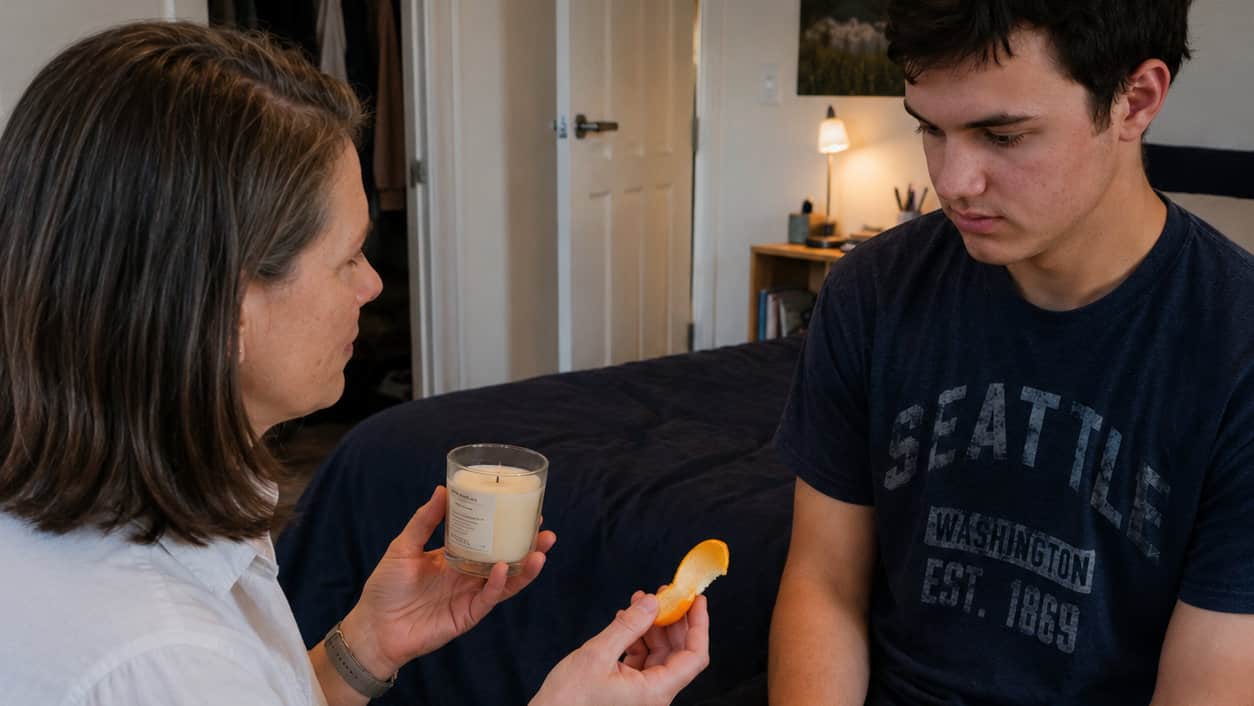
She offered two pleasant scents and let him pick.
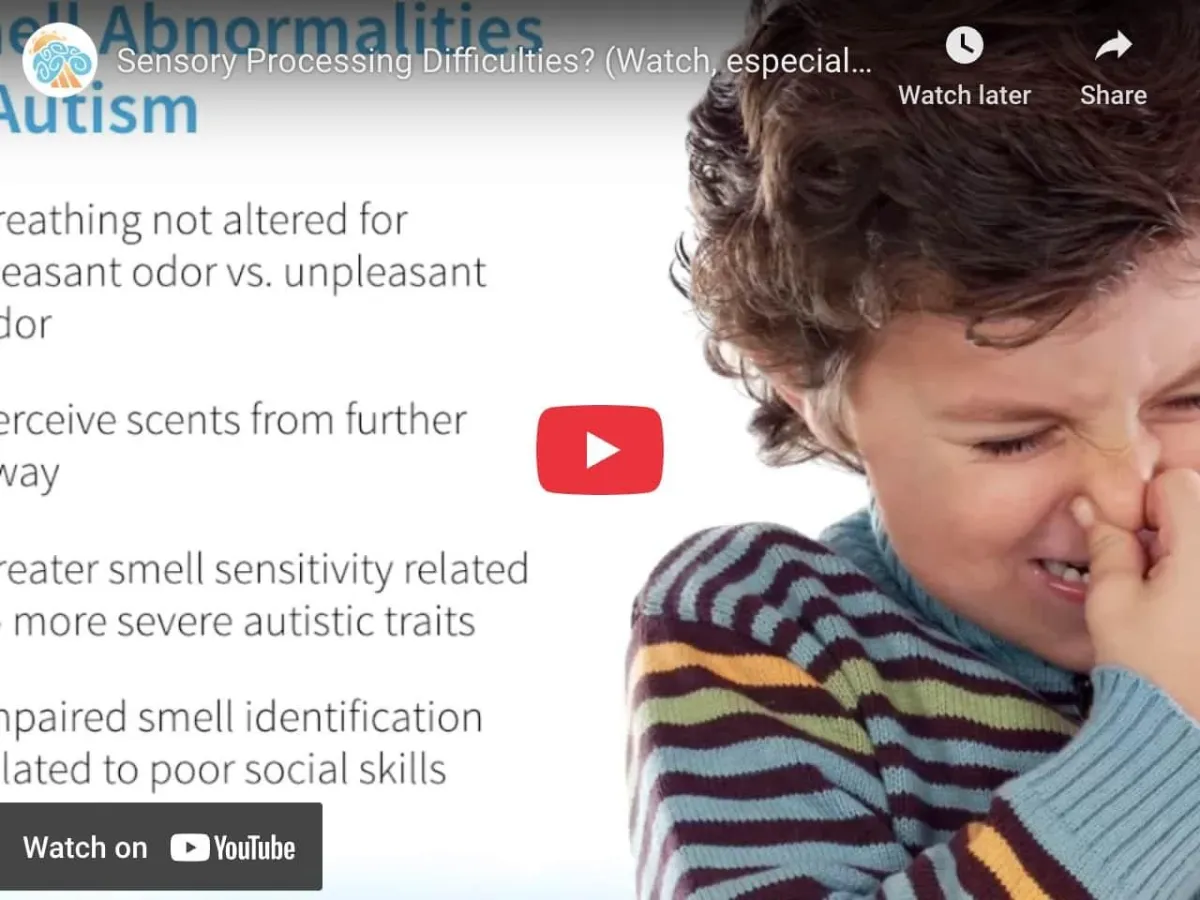
The picking matters more than which scent he picked. Smell is the only sense that reaches the limbic system without going through the thalamus first, which means it bypasses most of the brain's filtering and lands almost directly on the amygdala.
Let a child choose between two pleasant scents and two things happen at once.
They get a pleasant signal into the part of the brain that runs threat detection, which calms it. And they get to choose, which engages the reward circuit that says "this is mine, I wanted this, I made this happen."
Choice without overwhelm.
That combination is what enrichment work runs on.
Then she scratched his back
At first he told her no.
She did not push through.
She softened, and tried again.
That part is the one to copy most carefully. The "not like that" from a defensive nervous system, followed by acceptance of a gentler version, is the threshold dropping in front of you.
You found the edge. You did not go past it.
The child's body just told you it can tolerate a little more than it could thrity seconds ago. That is the work.
Slow, gentle stroking of skin activates a class of nerve fibres called C-tactile afferents that project into the parts of the brain involved in social bonding and emotional regulation, not the part involved in mapping where your body is in space. It is, biologically speaking, the touch of being cared for. It tells the system that someone safe is here.
By the time he was on the drive home, his amygdala was quieter than it had been an hour earlier. His insula was getting pleasant signals instead of threatening ones. His prefrontal cortex, the part that runs language, had room it did not have before.
So he used it.
He asked a question. Then he kept talking.
Here is what to try tonight.
Pick two scents your child enjoys.
Not what you think they should like. What they actually light up for.
Strawberry, vanilla, chocolate, a piece of fresh orange peel, a flower from the garden, the cinnamon from the spice rack, whatever it is. The scent itself is not the active ingredient. The fact that your child gets to choose between two things that are pleasant for them is the active ingredient.
If they are not interested or able to pick them up and make a choice, then you can hold one to their nose, then the other, and ask which they like better.
If they cannot answer in words, watch the face. The body answers first.
Then, with their permission, do something gentle and slow that they like.
A back scratch, a hand stroke, brushing their hair. Whatever you know is on the good side of their threshold.
If they say no or pull away, do not push. Soften by half. Try again. If they say no again, stop and try something else. The information is in the no, not against it.
Then stop talking for a little while.
Let their system settle in the new state. Do not ask them to perform.
What you are watching for is not necessarily speech. You are watching for the gap between the version of your child who walked in and the version of your child who is sitting next to you ten minutes later. More eye contact. A softer face. A spontaneous gesture. A word that was not there earlier. Any of those is bandwidth coming back online.