How Music Practice in Twins Helps Us Understand How Environmental Enrichment Changes the Brain
A practical explanation for parents raising children with autism or other developmental challenges
Parents often ask a simple but important question: How does Environmental Enrichment actually change the brain?
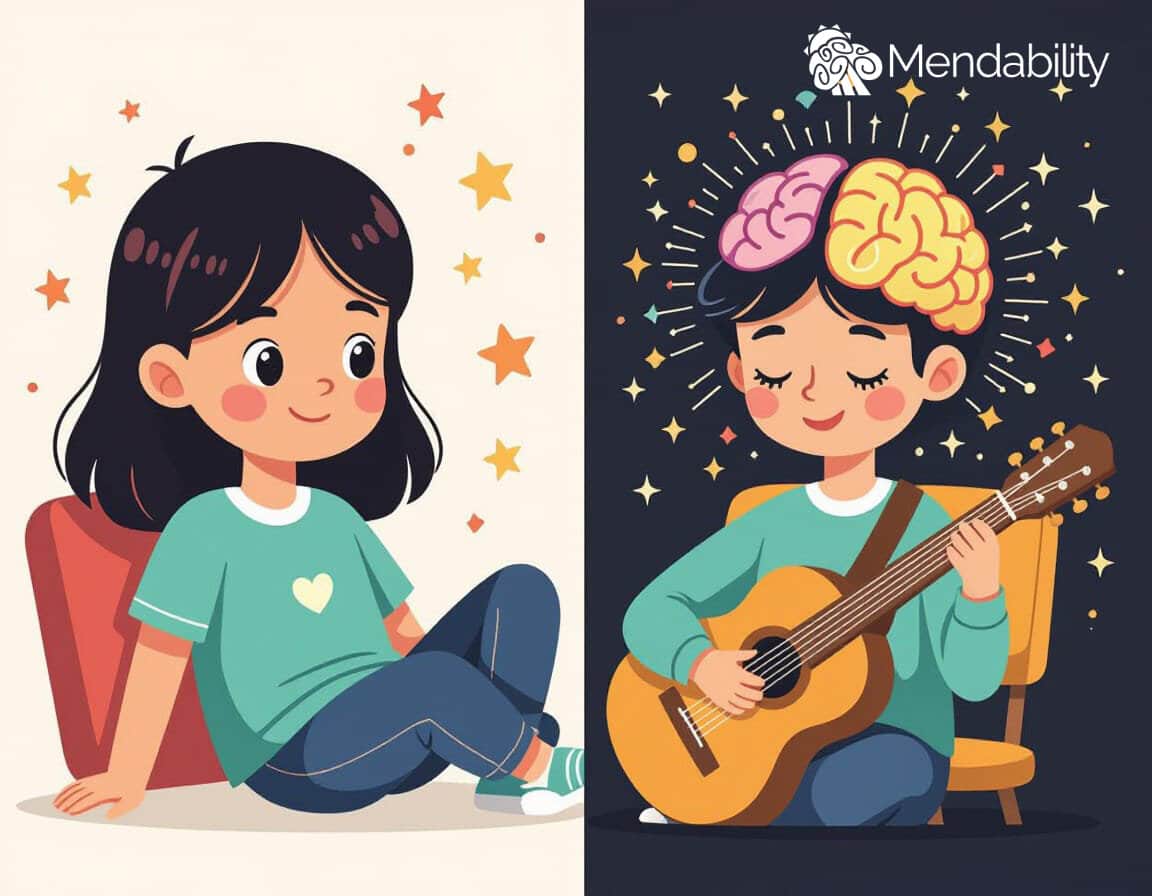
A fascinating study of twins and musical practice gives us a window into exactly that.
Even though the study is not about autism, it answers questions that matter deeply to families of neurodivergent children:
• Does practice really change the brain?
• Does genetics limit what my child can achieve?
• Is there a “window” for brain plasticity?
• Can experiences at home still make a difference as children get older?
Surprisingly, this research suggests the brain stays open to change far longer than many people think.
What the researchers did
This was a large study with 118 twin pairs. One twin in each pair practiced music far more than the other. Because twins share nearly identical genetics (especially identical twins), researchers could test a powerful question:
How much of the brain’s development is driven by experience, not genes?
And they found clear evidence that practice matters.
The authors write that musical practice
“is associated with a greater cortical surface area in regions supporting auditory, motor, and cognitive control functions”.
In other words, the brain physically reorganizes itself around enriched stimulation.
Why this matters for parents
This study shows something incredibly important for families raising autistic or otherwise neurodivergent children:
The brain changes most when experiences are:
Repetitive enough to build wiring
Varied enough to remain interesting
Multisensory
Emotionally meaningful
Done over time, not in one “critical period”
That list describes music practice— but it also describes Environmental Enrichment (EE).
1. Experience changes brain structure
The researchers found
“practice-related differences in cortical surface area that could not be explained by genetic factors alone”.
Parents often worry:“Is my child’s brain already set?”
This study says: No. Experience still matters. A lot.
2. The brain stays plastic longer than expected
The study reports that experience-dependent effects were seeneven in older children and adolescents. The authors note that the findings
“suggest prolonged experience-dependent plasticity beyond early childhood”.
For families who missed the intensive-therapy window at age 2–3, this is encouraging:
You haven’t missed anything. The brain is still ready to grow.
3. Practice needs to be rich, not forced
They note that musical training is an example of “repetitive, multisensory, cognitively demanding activity” that strengthens neural networks over time .
This is exactly why environmental enrichment uses short, enjoyable, sensory-motor games rather than drills or rewards.
4. Enrichment builds multiple brain systems at once
Musical practice did not only change the auditory system. It strengthened connections across
“motor regions, premotor cortex, and areas associated with attention and executive control”.
This is critical.
Autistic children rarely struggle in just one area.
The most meaningful improvements come when multiple systems grow together.
That is the central principle of Sensory Enrichment Therapy.
How music approximates Environmental Enrichment
Parents often think Environmental Enrichment means toys, sensory bins, or a special room.
But in neuroscience, enrichment simply means:
“More varied, more meaningful experience for the brain.”
Music checks every box:
1. Multisensory
• Hearing the notes
• Feeling vibrations
• Moving fingers or body
• Visual tracking of a page or teacher
2. Novel and varied
New pieces, new rhythms, new challenges — the opposite of rote repetition.
3. Emotionally engaging
Pleasure and motivation release dopamine, which strengthens synapses.
4. Social
Lessons, performances, practicing with a parent — all increase social engagement.
5. Builds multiple systems at once
• Motor planning
• Executive function
• Working memory
• Auditory processing
• Self-regulation
• Attention switching
This is why researchers increasingly use music training to studyreal-world plasticity.
And it’s why environmental enrichment usespaired sensory-motor experiences— to activate whole-brain networks the same way music does.
What does this mean for autistic children?
Many parents tell us:
“My child is bright, but their brain seems stuck… nothing transfers from therapy into real life.”
This study shows why traditional, isolated skills training often falls short.
When the brain grows through enrichment, growth spreads.
It changes whole systems, not single tasks.
Imagine the difference between:
• Learning a memorized social script
vs.
• Growing a brain that naturally handles sensory input, emotional signals, and social cues more comfortably.
Environmental enrichment works on the second path: strengthen the brain’s foundations so new skills can emerge naturally.
This study supports that by showing that: rich, engaging, multisensory experiences change the brain far more than genetics predicted.
Takeaway for parents
If a twin with the same genes — the same starting materials — can develop a measurably different brain simply by practicing an enriched activity like music, then your child’s brain can change too.
The most hopeful message is in the authors’ own words:
“Our findings demonstrate experience-dependent structural plasticity that extends beyond early developmental windows.”
Your child is not “too old.”
Their brain is not “fixed.”
Daily enriched experiences at home still matter, still build wiring, and still unlock new growth.
That is the promise of environmental enrichment.
And it’s the reason Sensory Enrichment Therapy helps so many families see real, life-changing progress.