Can sensory enrichment reverse the effects of sensory deprivation?
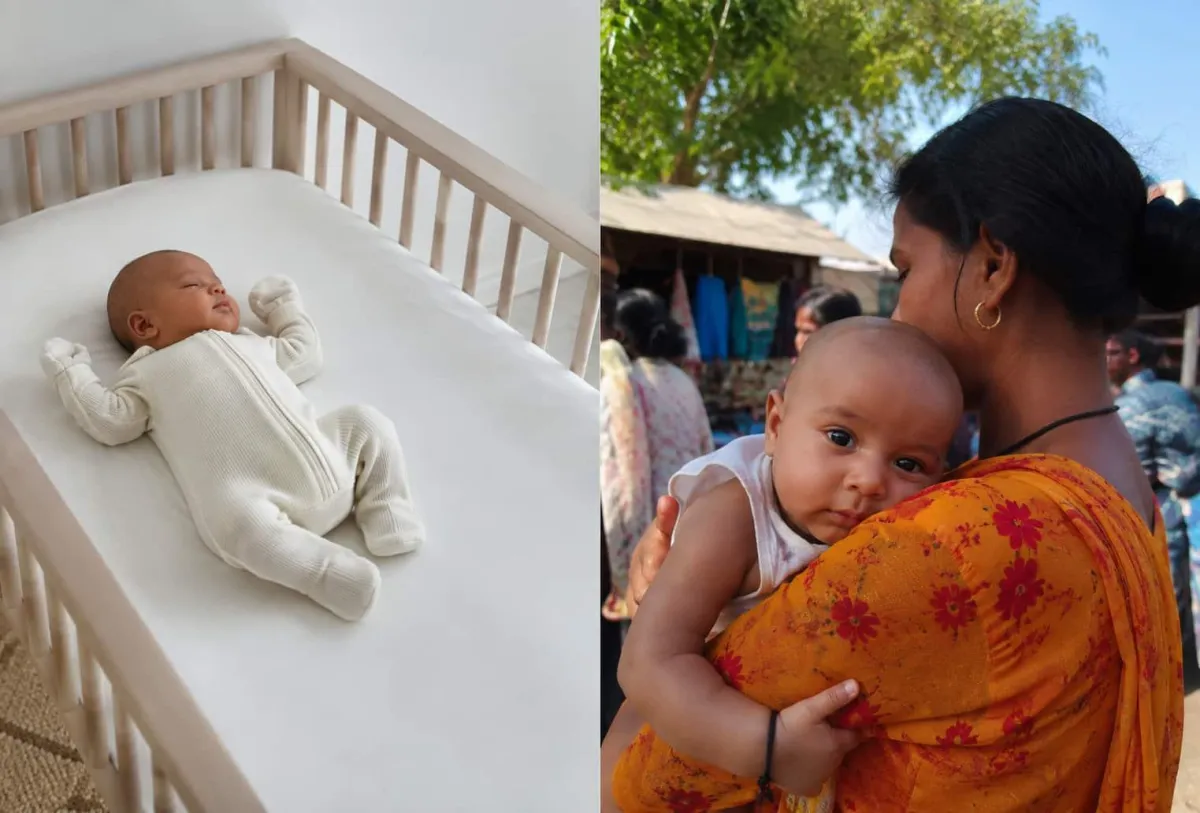
We are careful with babies.
We put mittens over their hands so they do not scratch themselves. We keep loud sounds away. We smooth the surfaces around them. We regulate the temperature. We choose fragrance-free products. We place them somewhere safe rather than carrying them every waking minute.
There are good reasons for all of those choices.
But the developing nervous system presents us with an interesting question:
Can we become so focused on protecting a child from unpleasant sensory experiences that we also reduce some of the varied, meaningful experiences the brain uses to develop?
That question is different from saying “more stimulation is better.” It isn't.
Painful touch is not enrichment. Excessive noise is not enrichment. An overwhelming environment is not enrichment.
The more interesting idea is that the brain may need a sufficiently varied stream of safe experiences involving movement, touch, sound, vision, balance, smell, objects and other people because neural development is partly experience-dependent.
There is surprisingly strong evidence for that principle.
What scientists mean by an enriched environment
“Environmental enrichment” has a specific history in neuroscience.
Researchers studying laboratory animals began comparing animals raised in relatively sparse cages with animals living in larger, more complex environments where they could move, explore, interact socially and encounter changing objects.
The results did not simply appear in behavior.
In 1964, Marian Diamond, David Krech and Mark Rosenzweig reported anatomical differences in the cerebral cortex of rats exposed to enriched environments. Later experiments found greater dendritic branching in animals raised in more complex environments. In 1997, Gerd Kempermann and colleagues reported more newly generated hippocampal neurons in adult mice living in enriched environments. PubMed
These are animal experiments, so we should not turn them directly into claims about human therapy.
But they established an important biological principle:changing an animal's experience can change the physical organization of its brain.
And in some experiments, enrichment did more than enhance normal development. It partially or substantially reversed effects produced by earlier adverse conditions.
For example, Darlene Francis and colleagues separated young rats from their mothers and later exposed some of them to environmental enrichment. They reported that enrichment during the peripubertal period reversed the effects of maternal separation on both stress physiology and behavior. PubMed
In another experiment, rats exposed prenatally to valproic acid developed behavioral abnormalities including reduced social behavior, increased repetitive behavior and altered responses to sensory stimuli. Schneider, Turczak and Przewłocki reported that an enriched environment reversed a number of those behavioral alterations. Nature
That does not demonstrate that sensory enrichment “reverses autism” in humans. It demonstrates something narrower and more useful: in animal models, adverse developmental trajectories are not always fixed, and sufficiently different environmental experience can sometimes shift them.
Humans provide a much harder test
We cannot experimentally raise human babies in deprived environments to see what happens.
Unfortunately, history has provided natural experiments.
Children raised in severely deprived Romanian institutions during the late twentieth century often experienced far more than poverty. Many had extraordinarily little individualized caregiving, language interaction, physical affection, social engagement and opportunity for normal exploration.
Researchers studying children later adopted into families found developmental patterns that were difficult to ignore.
Michael Rutter and colleagues studied Romanian adoptees and identified what they called “quasi-autistic patterns” following profound institutional deprivation. At follow-up, 16 children showed this pattern, equivalent to 9.2% of the institution-reared Romanian adoptees with IQ scores of at least 50, compared with none of the domestic adoptees. Some children subsequently lost their autistic-like features. The researchers also emphasized that, despite similarities to autism, important differences suggested that the condition had “a different meaning.” PubMed
A separate study of 80 Romanian children adopted into the Netherlands found stereotyped behavior and communication or language problems in approximately one third. Six met that study's criteria for the autistic spectrum and another seven fell into an intermediate category. PubMed
Brain studies found differences as well. Harry Chugani and colleagues used PET imaging in ten children adopted from Romanian orphanages and found reduced glucose metabolism in several regions involved in emotion, cognition and social behavior. Another study found altered white-matter integrity in the uncinate fasciculus of previously institutionalized children. PubMed
None of this tells us which component of deprivation was responsible. These children were not simply deprived of textures or smells. They experienced profound psychosocial deprivation involving caregiving, language, attachment, movement, sensory experience and other environmental factors.
That distinction is essential.
But the next part of the story strengthens the case that experience itself mattered.
Some effects of profound deprivation were recoverable
The Bucharest Early Intervention Project went further.
Children living in Romanian institutions were randomly assigned either to continued institutional care or to placement with specially recruited foster families. It remains one of the most important experiments ever conducted on the effects of early human experience.
Children moved into foster care showed better cognitive development than children who remained in institutional care. At 54 months, children placed in foster care before roughly two years of age showed the strongest cognitive recovery. PubMed
That is not a sensory-enrichment experiment in the narrow sense. Foster families changed almost everything about the children's environment.
But that is precisely why the finding matters.
Family life brought touch, movement, voices, facial expressions, changing places, object exploration, reciprocal interaction, play, unpredictable events and sustained relationships back into the child's everyday experience.
The environment became richer.
And development changed.
Babies normally live in remarkably multisensory worlds
One reason this question deserves more attention is that contemporary Western infant care is only one of many ways human beings have raised babies.
Observational work among Aka hunter-gatherers and neighboring Ngandu farmers in Central Africa illustrates the range. Researchers observed infants across all 12 daylight hours and found that Aka infants were substantially more likely to be held and physically close to caregivers. PubMed
This doesnotprove that Aka child-rearing is neurologically superior. We should not romanticize another culture or assume that one caregiving pattern is universally optimal.
It does demonstrate something simpler: human infants are capable of developing in environments involving very high levels of physical contact and continuous movement.
Experimental research suggests that physical contact itself can alter aspects of development.
In a randomized study, Elizabeth Anisfeld and colleagues gave one group of mothers soft baby carriers designed to increase physical contact, while another group received infant seats. Mothers in the carrying group became more responsive to their infants' vocalizations, and significantly more of the carried infants were securely attached at 13 months. OUP Academic
Another randomized experiment found that additional carrying substantially reduced infant crying and fussing at six weeks of age. PubMed
Again, carrying is not a magic neurological treatment. It simultaneously provides touch, vestibular stimulation, proprioceptive changes, warmth, movement, changing visual perspectives, caregiver scent, speech and social interaction.
In other words, it is naturally multisensory.
Even tiny changes in experience can change what infants learn
Some of the most elegant evidence comes from experiments that changed one small part of an infant's sensory-motor experience.
Young infants who could not yet reliably grasp objects were given “sticky mittens,” with Velcro on the palms that allowed them to pick up lightweight toys. After only 10 to 14 short play sessions, those infants explored objects differently from infants who had not received the experience. ScienceDirect
A subsequent experiment found something even more interesting. Three-month-old infants given active experience grasping objects became better at interpreting the goal of another person's reaching action. Their own motor experience had affected how they perceived someone else's action. PubMed Central (PMC)
This makes scratch mittens an interesting example, but not for the reason we might initially think.
There isno evidence that ordinary scratch mittens harm development.
What the research tells us is that active hand-object experience matters enough that experimentally changing it can alter subsequent exploration and perception. That should make us interested in opportunities for touching, grasping, manipulating and exploring, not frightened of mittens.
Sound provides another example.
Patricia Kuhl and colleagues exposed nine-month-old American babies to Mandarin speakers during 12 live sessions. The infants subsequently became better at discriminating Mandarin speech sounds. Babies exposed to exactly the same material by video or audio recording did not show the same learning. PubMed
So the useful lesson is not “make the nursery noisy.”
It is that meaningful, interactive auditory experience can shape the developing perceptual system.
Talking, singing, listening, turning toward voices and hearing the changing sounds of ordinary life are very different from either harmful noise or passive background stimulation.
What about smell?
This is where I would be particularly cautious about modern parenting advice.
Choosing fragrance-free baby products should not be described as sensory deprivation. Artificial fragrance can irritate some people, and babies certainly do not need perfume in order for their olfactory systems to develop.
But “fragrance-free” and “odor-free” are very different things.
A baby's natural world already contains the smell of caregivers, milk, skin, foods, outdoors, bathwater, clothing and innumerable changing environments.
Human newborns orient preferentially toward maternal breast odors, and experimental studies show that newborns can learn associations with novel odors. PubMed
So the goal should not be to manufacture more smells. It should be to recognize that smell is one part of the child's normal informational environment, alongside touch, movement, sound and vision.
Sensory enrichment is not the same thing as a sensory diet
This distinction matters particularly in autism.
A “sensory diet” is commonly discussed as a way of giving an individual particular kinds of sensory input to help them regulate, remain comfortable or participate in an activity.
Environmental enrichment asks a different question.
It is not primarily:
What sensory input does this child need right now because their nervous system responds atypically?
It is closer to:
What safe, enjoyable experiences can give this nervous system opportunities to encounter novelty, variation, movement, combinations of senses, exploration and learning?
One approach is primarily regulatory. The other is developmental.
They can overlap, but they are not the same idea.
There is an instructive example outside autism. In a controlled study of nursing-home residents with dementia, researchers compared an ordinary sensory garden with an “enriched” garden containing 12 interactive modules involving activities such as balance challenges, manipulating different materials, music-making, gardening, visual exploration and other active tasks. Residents encouraged to use the enriched garden showed better cognitive and functional outcomes over six months than residents encouraged to use the conventional sensory garden or those receiving usual care. The study was not randomized, so its conclusions need confirmation, but it illustrates an important distinction between simply being surrounded by sensory stimuli and actively interacting with a complex environment. PubMed
That may be one of the most useful ways to understand enrichment.
It is not sensory bombardment. It is experience.
So can sensory enrichment reverse sensory deprivation?
In animals, there are experiments where the answer is clearly yes for particular consequences of experimentally induced deprivation or developmental disruption. Environmental enrichment can alter dendrites, neurogenesis, behavior and stress regulation, and in some models can reverse previously induced abnormalities. PubMed
In humans, the answer has to be more precise.
Profoundly deprived children can develop severe cognitive, social and behavioral abnormalities, including patterns that resemble autism. Moving children into richer caregiving environments can produce substantial developmental recovery, particularly when that change happens early. PubMed
We also know experimentally that relatively small changes in touch, carrying, active object exploration and interactive language exposure can alter specific aspects of infant behavior and learning. OUP Academic
What wedo notyet know is whether ordinary children in modern homes experience a clinically significant form of sensory deprivation, whether such deprivation contributes meaningfully to autism, or whether sensory enrichment works by “reversing sensory deprivation” in autistic children.
Those remain hypotheses.
But there is enough evidence to take the underlying question seriously.
Perhaps the developing brain does not merely need protection from harmful stimulation.
Perhaps it also needs something positive: frequent opportunities to touch, move, smell, listen, balance, manipulate, explore, interact and encounter something slightly different from yesterday.
And if development has already taken an atypical path, the neuroscience of environmental enrichment gives us another important reason not to assume that the path is fixed.
References
Diamond MC, Krech D, Rosenzweig MR.The effects of an enriched environment on the histology of the rat cerebral cortex.Journal of Comparative Neurology. 1964;123:111-120. DOI: 10.1002/cne.901230110. PubMed
Greenough WT, Volkmar FR, Juraska JM.Effects of rearing complexity on dendritic branching in frontolateral and temporal cortex of the rat.Experimental Neurology. 1973;41:371-378. PubMed
Kempermann G, Kuhn HG, Gage FH.More hippocampal neurons in adult mice living in an enriched environment.Nature. 1997;386:493-495. DOI: 10.1038/386493a0. ResearchGate
Francis DD, Diorio J, Plotsky PM, Meaney MJ.Environmental enrichment reverses the effects of maternal separation on stress reactivity.Journal of Neuroscience. 2002;22:7840-7843. Journal of Neuroscience
Schneider T, Turczak J, Przewłocki R.Environmental enrichment reverses behavioral alterations in rats prenatally exposed to valproic acid.Neuropsychopharmacology. 2006;31:36-46. DOI: 10.1038/sj.npp.1300767. Nature
Rutter M, et al.Quasi-autistic patterns following severe early global privation.Journal of Child Psychology and Psychiatry. 1999;40:537-549. PubMed
Rutter M, et al.Early adolescent outcomes of institutionally deprived and non-deprived adoptees. III. Quasi-autism.Journal of Child Psychology and Psychiatry. 2007;48:1200-1207. PubMed
Hoksbergen R, ter Laak J, Rijk K, van Dijkum C, Stoutjesdijk F. Post-Institutional Autistic Syndrome in Romanian adoptees. Journal of Autism and Developmental Disorders. 2005;35:615-623. PubMed
Chugani HT, et al.Local brain functional activity following early deprivation: a study of postinstitutionalized Romanian orphans.NeuroImage. 2001;14:1290-1301. PubMed
Eluvathingal TJ, et al.Abnormal brain connectivity in children after early severe socioemotional deprivation. Pediatrics. 2006;117:2093-2100. PubMed
Nelson CA III, Zeanah CH, Fox NA, Marshall PJ, Smyke AT, Guthrie D. Cognitive recovery in socially deprived young children: The Bucharest Early Intervention Project. Science. 2007;318:1937-1940. DOI: 10.1126/science.1143921. PubMed
Hewlett BS, Lamb ME, Shannon D, Leyendecker B, Schölmerich A.Culture and early infancy among central African foragers and farmers. Developmental Psychology. 1998;34:653-661. PubMed
Anisfeld E, Casper V, Nozyce M, Cunningham N.Does infant carrying promote attachment? Child Development. 1990;61:1617-1627. OUP Academic
Hunziker UA, Barr RG.Increased carrying reduces infant crying: a randomized controlled trial.Pediatrics. 1986;77:641-648. PubMed
Needham A, Barrett T, Peterman K.A pick-me-up for infants' exploratory skills: early simulated experiences reaching for objects using “sticky mittens”. Infant Behavior and Development. 2002;25:279-295. ScienceDirect
Sommerville JA, Woodward AL, Needham A.Action experience alters 3-month-old infants' perception of others' actions.Cognition. 2005;96:B1-B11. PubMed Central (PMC)
Kuhl PK, Tsao FM, Liu HM.Foreign-language experience in infancy: effects of short-term exposure and social interaction on phonetic learning.PNAS. 2003;100:9096-9101. PubMed
Bourdon E, Belmin J.Enriched gardens improve cognition and independence of nursing home residents with dementia: a pilot controlled trial.Alzheimer's Research & Therapy. 2021;13:116.